
Why the Los Angeles wildfires matter for Australian insurance premiums
A disaster with global financial consequences
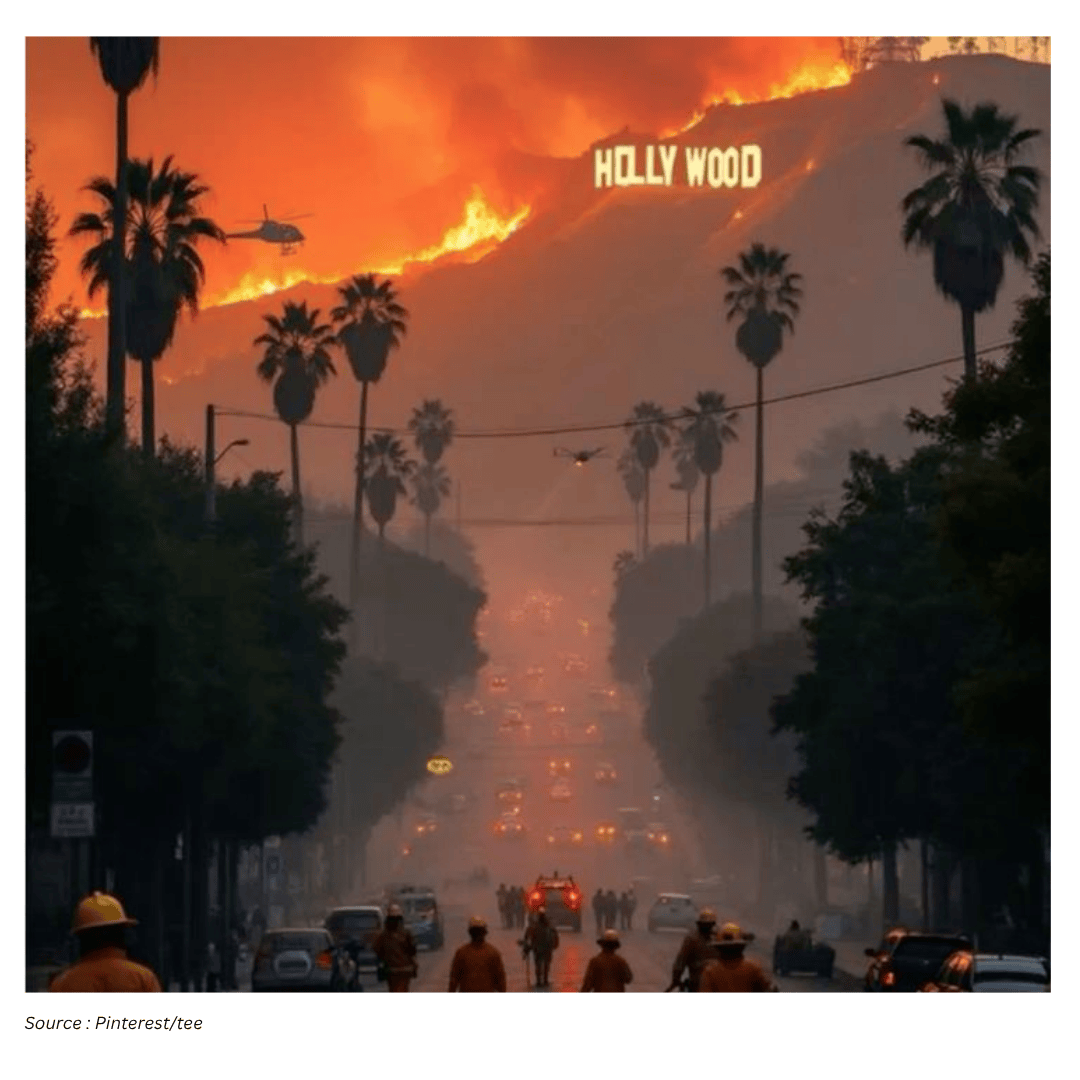
A series of wildfires in Los Angeles County has caused widespread devastation in California. The fires have been linked to at least 24 deaths and the destruction of more than 12,000 homes and structures. Thousands of residents have been evacuated, and the danger has not yet passed.
Beyond the immediate human and physical toll, the scale of the losses is also forcing a reassessment of how insurance markets cope with increasingly severe disasters. Some estimates have placed the cost of damage and broader economic loss at between A$400 billion and A$450 billion, with only A$32 billion insured. That gap between insured and uninsured losses is a central issue for households, governments and insurers alike—and it is not confined to California.
The insurance protection gap: when losses outpace cover
The Los Angeles fires offer a stark illustration of what is often called the insurance protection gap: the difference between the total losses caused by a disaster and the portion that is covered by insurance. When insured losses are low relative to the total cost of damage, the remaining bill does not disappear. It is typically carried by property owners themselves and by public funds as communities rebuild.
In California, the protection gap has been growing as the state experiences increasingly devastating wildfires year after year. The latest losses underline how quickly the financial burden can shift from private insurance markets to individuals and government budgets when coverage is limited, unavailable or insufficient.
Why insurers are pulling back in California
California’s insurance market has been under mounting strain. In response to growing risk, escalating insurance claims, and rising reinsurance and construction costs, at least a dozen of the largest property insurers—together making up about 80% of the Californian market—have either withdrawn from offering wildfire coverage or restricted new policies.
One high-profile example came in March 2024, when State Farm, the United States’ largest property insurer, announced it would not renew about 72,000 policies in selected California postcodes deemed too risky to insure for wildfire. Those non-renewals included 1,626 homes in Pacific Palisades, the scene of one of the most damaging recent fires.
The underlying message is straightforward: for insurers, it is becoming too expensive to do business in parts of California under existing settings. When the expected cost of claims rises and uncertainty increases, insurers may respond by raising premiums, narrowing coverage, limiting new business, or exiting particular segments altogether.
The rise of “last resort” cover—and its limits
As traditional coverage becomes harder to obtain, demand grows for alternative protection options. In California, one such option is the California FAIR Plan, a state-legislated collaboration between insurers designed to provide a wildfire policy for people who have been refused by other insurance companies.
However, the FAIR Plan is deliberately “bare-bones”. Homeowners seeking cover for additional structures, theft and liability, or other perils generally need to purchase an additional top-up. There are also limits that can leave households exposed: residential payouts are capped at US$3 million (A$4.8 million), which can mean many policyholders are underinsured.
Demand for the California FAIR Plan has surged since 2019, rising by 164%. That rapid growth, combined with the scale of losses seen in the latest fires, has raised concerns that California’s insurer of last resort could face severe financial pressure, including the possibility of bankruptcy.
Why Australians should pay attention
It can be tempting to view California’s insurance turmoil as a local problem, driven by local hazards and local regulation. But the shockwaves can travel. The reason is that insurance is not only a national business; it is also tied to global capital markets—especially through reinsurance.
Australia is not starting from a position of comfort on affordability. Some 15% of Australian households already face extreme insurance stress, defined as a situation in which it costs four weeks or more of pretax income to buy an insurance policy. In that context, any additional upward pressure on premiums matters.
After the Los Angeles wildfires, Australian premiums may rise further. The mechanism is not mysterious, but it is often poorly understood outside the industry.
Reinsurance: the global link between disasters and premiums
To cover large-scale losses—such as those seen after the 2022 floods in Australia—insurance companies typically buy reinsurance in the global market. In practical terms, insurers take out their own large insurance policies so they can pay mass claims after a major disaster without exhausting their own balance sheets.
When large losses occur, the cost of global reinsurance capital tends to rise. This happens as risk increases, losses mount, and reconstruction costs climb. The reinsurance payments associated with wildfire losses in California can therefore contribute to higher reinsurance costs more broadly, creating a ripple effect across insurance markets worldwide.
For Australian policyholders, this matters because higher reinsurance costs can flow through to the price of local insurance, even when the disaster occurred in another country. Premiums are shaped not just by local claims, but also by the global cost of transferring risk.
Local pressures in Australia: uncertainty and disaster risk
Global reinsurance is not the only factor that can push Australian premiums higher. Australia faces its own climate uncertainty and an increasing risk of disaster. Future extreme weather and the losses it may cause are becoming harder to predict. Where uncertainty rises, premiums often rise too, as insurers and reinsurers increase their capital reserving for potential losses.
California’s crisis is also a reminder of a particularly confronting reality: wildfires are not only a rural issue or a problem confined to the edges of cities. The losses can occur in urban and suburban settings, and they can even occur in winter rather than only during a defined “wildfire season”.
Australia has so far avoided a catastrophic citywide fire, but the intensification of bushfire seasons raises the prospect of a similar insurance crisis if a major urban area experiences widespread destruction.
Australia’s warning signs: fires that reached the suburbs
Australia has already seen events that point to what can happen when fire reaches populated areas. The 2003 Canberra bushfires destroyed more than 500 homes in suburban areas. In 2021, the Wooroloo fire destroyed 86 homes on Perth’s northeastern fringe.
In 2019, the Gospers Mountain mega-blaze came dangerously close to advancing on Sydney’s urban heart. It was held back by a timely southerly wind change. These events are reminders that the boundary between “bushfire risk” and “city risk” is not fixed.
What this could mean for Australian policyholders
For households, the most immediate concern is affordability: if premiums rise, more people may struggle to maintain adequate cover. But the issue is not only the price of insurance. It is also about what is covered, what is excluded, and whether the insured amount is enough to rebuild after a major loss.
The Los Angeles fires highlight how quickly underinsurance can become a widespread problem when coverage is restricted or capped. While the specific products and rules differ across jurisdictions, the underlying risk is similar: when the cost of rebuilding is high and the hazard is severe, households can be left exposed unless their policy settings match the reality of potential losses.
Practical steps Australians can take now
There is no single action that can eliminate the broader forces pushing premiums upward. Still, there are meaningful steps policyholders can take to better understand their exposure and reduce the chance of nasty surprises after a claim.
Check what your policy covers—and what it excludes. A recent parliamentary inquiry into the 2022 floods recommended greater clarification over exclusions. Even where a policy appears comprehensive, exclusions can materially affect how it responds in a disaster.
Review the product disclosure statement (PDS). Policyholders should read the terms and conditions in their PDS, paying close attention to definitions, limits, and any requirements that apply to claims.
Ask questions before renewal. If you are unsure what a particular policy covers, contact your insurer prior to renewal. Clarifying coverage settings in advance can be easier than disputing them after a loss.
Consider steps to improve bushfire resilience. Beyond checking or upgrading coverage, homeowners can take actions to make their homes more bushfire resilient.
A resilience tool aimed at reducing risk—and potentially premiums
One recent initiative focuses on helping households assess and improve their preparedness. Last year, the Resilient Building Council partnered with the federal government to launch a free app that homeowners can use to assess their fire resilience. The app is designed to help users identify improvements and, by making those improvements, earn premium reductions from participating insurers.
While insurance pricing is influenced by many factors, resilience measures speak to a core part of the equation: reducing the likelihood or severity of damage. In a world where disasters are becoming more costly and uncertainty is rising, measures that reduce risk can become increasingly important for households trying to keep insurance both available and affordable.
The bigger lesson: fire risk is changing, and markets are reacting
The Los Angeles wildfires have intensified an already difficult conversation about what happens when the cost of disasters rises faster than the capacity—or willingness—of insurance markets to absorb them. California’s growing protection gap, insurer withdrawals, and reliance on a bare-bones insurer of last resort show how quickly a market can shift when risk becomes concentrated and losses escalate.
For Australia, the implications are twofold. First, global reinsurance dynamics mean major overseas disasters can contribute to higher costs locally. Second, Australia’s own exposure to extreme weather and bushfire risk—combined with the difficulty of predicting future losses—adds further pressure.
Above all, the events in California are a reminder that under a changing climate, Australians may be more at risk from fire than many realise, including in the nation’s largest cities. The challenge for households is to stay informed about coverage and take practical steps to reduce vulnerability, even as broader market forces continue to evolve.