
Tech-enabled insurance options emerge for African smallholders as climate risks intensify
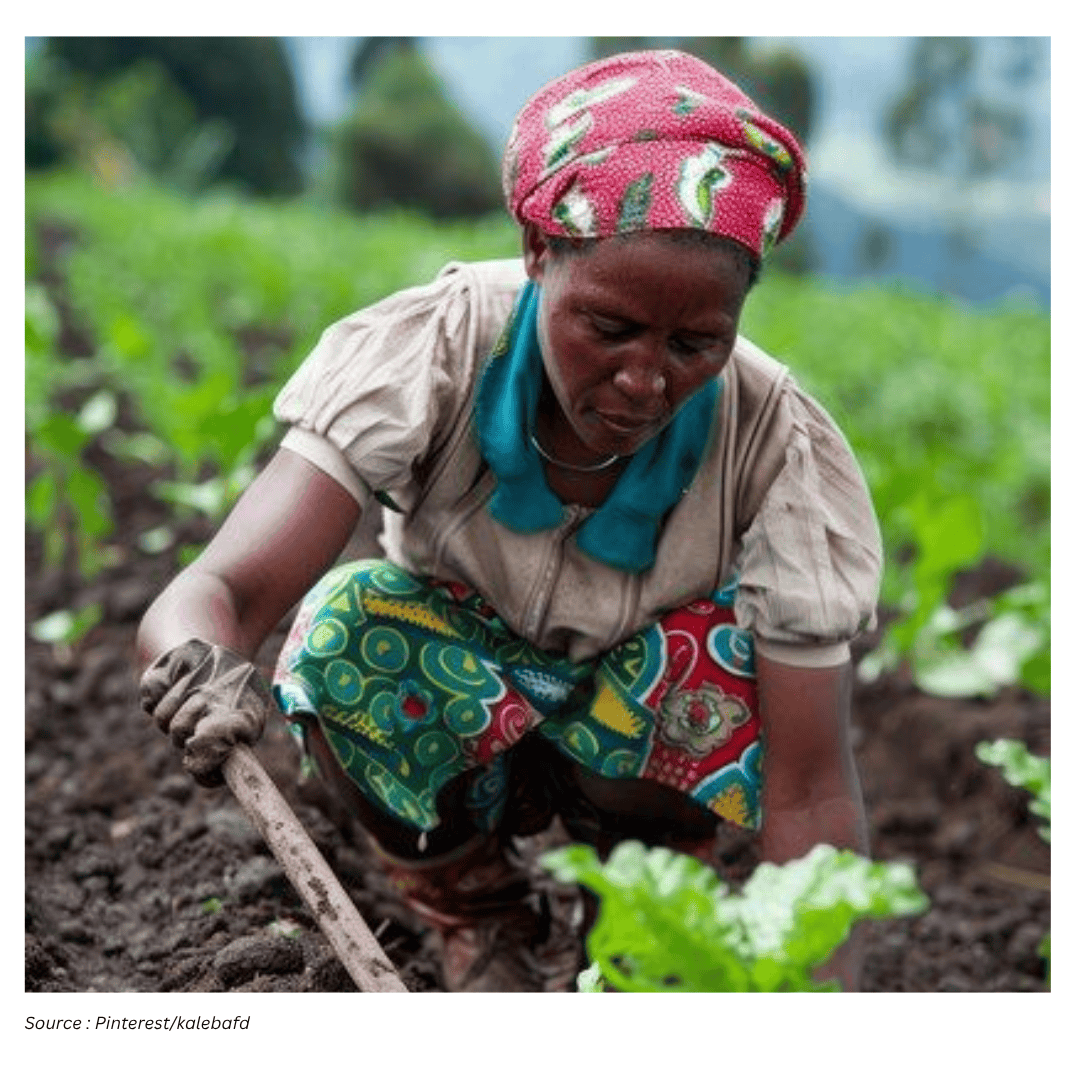
Climate shocks are raising the stakes for African farmers
Storms, drought, floods and heatwaves can devastate small-scale farming in Africa, destroying crops and livestock and undermining already-fragile livelihoods. Many farmers depend on rain-fed agriculture, making their incomes closely tied to weather patterns. As climate change increases the frequency of droughts, floods, cyclones, pests and diseases, farming has become riskier than ever in many parts of the continent. Rising temperatures also mean crops that were once well-suited to local climates may no longer thrive, adding another layer of uncertainty for producers.
The risk is not only about what happens when a disaster strikes. The mere possibility of a bad season can discourage farmers, pastoralists and small enterprises from investing in better inputs, improved practices or expansion. That hesitation can reduce productivity and limit incomes, reinforcing a cycle in which households remain vulnerable to the next shock.
Globally, nearly one in five people are considered at risk of facing a severe weather event that they will struggle to recover from. In Africa, that figure is higher: two in every five people face that risk. Against this backdrop, the question is not whether farmers need better tools to manage climate volatility, but how those tools can be made accessible and effective at scale.
Why agricultural insurance remains out of reach for many smallholders
Despite the growing threat from extreme weather, very few farmers in Africa are insured against weather shocks. A central challenge is cost. For many insurers, the expense of marketing agricultural insurance products, enrolling clients, and verifying losses can exceed the small sums that smallholder farmers are able to insure. When the administrative costs are high relative to the premiums, insurers have limited incentive to offer coverage broadly.
Insurers also face information problems. Assessing an individual farmer’s risk profile—and evaluating the extent to which a farmer has taken steps to prevent or reduce damage—can be difficult. These uncertainties can make insurance companies reluctant to offer coverage to smallholder farmers, particularly when the insurer cannot easily distinguish between higher- and lower-risk clients or verify on-farm conditions after an event.
The result is a large protection gap. Without insurance, millions of farmers, pastoralists, and small and medium agricultural businesses remain exposed to losses that could wipe out their livelihoods. When shocks hit, recovery can be slow and uneven, and households may be forced to reduce consumption, sell assets, or cut back on productive investments.
Index-based insurance: the main option, with a major drawback
In many settings, index-based insurance has become the primary approach for reaching agricultural clients at lower cost. Unlike traditional indemnity insurance, index-based products do not require checking conditions on every individual farm. Instead, they rely on general data to estimate losses for a region. That data might include rainfall measured at nearby weather stations, vegetation measured by satellite images, or average crop yields in an area.
Because this data is cheaper to collect and does not depend on monitoring each farmer’s individual effort to prevent damage, insurers can keep costs lower and extend coverage to many more clients. In principle, this makes index-based insurance a practical way to broaden access, especially where farms are dispersed and loss verification is costly.
However, index-based insurance comes with a well-known issue: basis risk. Basis risk occurs when payouts do not match the actual damage experienced by a particular farmer. Since the insurance product uses general data to infer losses across a region, it may fail to reflect the reality on a specific plot of land.
For example, a farmer’s crops may be destroyed, but the index data indicates that the region did not experience damage severe enough to trigger a payout. In that case, the farmer receives no compensation despite real losses. The reverse can also happen: the index suggests damage in the area, triggering a payout even if an individual farmer’s crops are fine. Either mismatch can undermine confidence in the product and discourage uptake over time.
When coverage is bundled, farmers may not know what they have
Another challenge is understanding and awareness. In some cases, insurance coverage is bundled with other products such as credit or fertiliser. While bundling can increase distribution and reduce transaction costs, it can also create confusion. Many farmers may not realise they are insured, and may not know what they are entitled to or how claims and payouts are supposed to work. When a shock occurs, this lack of clarity can reduce the perceived value of insurance and weaken trust in the broader system.
Newer models aim to make insurance cheaper, clearer and more responsive
Economists Berber Kramer and Ruth Vargas Hill have argued in a policy note directed at the Group of 20 (G20) that newer, technologically advanced insurance types exist and could be rolled out more widely across Africa. Their focus is on approaches that can reduce costs, improve accuracy, and better match the realities of smallholder farming. Several innovations stand out for how they attempt to address the limitations of conventional models.
- Insurance coupons that allow farmers to select and purchase insurance for specific periods when they anticipate higher risk.
- Informal insurance networks that build on existing community groups to pool resources for times of distress.
- Picture-based insurance that uses smartphone photos to assess crop damage remotely.
- Gender-based insurance designed to directly address risks faced by women farmers.
Insurance coupons: coverage that can be tailored to critical moments
Insurance coupons are designed to let farmers “mix and match” policies based on their needs. Rather than committing to a single, broad product, a farmer could buy coverage specifically for a time window when weather conditions are most critical for crop survival.
One example described is insurance that pays out if rainfall drops below a certain level over a two-week period. The intent is to protect against weather disasters that could cause crops to fail—such as drought during a stage when crops need rainfall. By allowing farmers to tailor coverage to very specific risks in a given period, coupons aim to make insurance feel more relevant and potentially more affordable, because the farmer is not paying for protection during times when the risk is lower or less consequential.
Informal insurance networks: building on groups that already exist
Informal insurance networks refer to groups that already operate in many communities, such as funeral groups, where members support one another during times of distress. The policy note suggests these networks could be expanded or replicated for farmers, enabling members to pool money that can be used when one farmer’s crops are damaged by weather.
Such arrangements are not a replacement for formal insurance, but they can reflect local trust relationships and shared norms. In contexts where formal insurance is limited or poorly understood, community-based pooling can offer a familiar structure for mutual support—though the scale of payouts depends on the group’s resources and the number of members affected at the same time.
Picture-based insurance: combining affordability with more precise loss assessment
Picture-based insurance uses smartphone photos to assess crop damage remotely and process claims. This approach is presented as a way to combine the affordability associated with index insurance with the accuracy of indemnity insurance, which typically involves verifying actual losses.
By relying on images rather than in-person inspections, picture-based models aim to lower the cost of verifying damage while improving the match between payouts and real losses. If designed and implemented well, this could reduce basis risk and make farmers more likely to buy and renew coverage, because the product is more closely tied to what happens on their own farms.
Gender-based insurance: addressing risks faced by women farmers
The policy note also highlights gender-based insurance—coverage that directly addresses the risks that women farmers face. While the note does not detail specific product features, the emphasis is that insurance design should consider how risks and constraints can differ by gender, and that products can be structured to respond to those realities rather than treating all farmers as a uniform group.
A regional example: livestock index insurance for pastoralists
Some index-based models are already being implemented in parts of Africa. In Djibouti, Ethiopia, Kenya and Somalia, pastoralists can access index-based livestock insurance through the DRIVE programme. The programme is described as a US$360.5 million project funded by the World Bank and other organisations, with the stated aim of connecting over 1.6 million pastoralists to insurance.
This example illustrates how large-scale initiatives can support insurance access for groups that are highly exposed to climate variability. It also underscores the role that public and development finance can play in expanding coverage where private markets alone may not reach.
What a G20 agenda could prioritise
The policy note argues that South Africa’s G20 presidency should use its platform to advance solutions that make agricultural insurance more viable and more widely available across the continent. Two broad priorities are highlighted.
- Continent-wide risk pooling: sharing risks across countries or regions to reduce the financial impact of localised shocks.
- Transfer policies for smallholder farmers: shifting risks to financial markets or third parties through mechanisms like insurance and re-insurance.
Risk pooling can help because weather shocks are often unevenly distributed. If risks are shared across larger geographies, the financial burden of a localised drought or flood does not fall entirely on one area’s insurers or public budgets. Transfer mechanisms, including re-insurance, can further spread exposure and support the sustainability of insurance programmes.
Improving product design and oversight
Beyond broad financial architecture, the policy note points to practical steps that could improve how insurance is designed, monitored and delivered. These steps focus on quality, learning and the use of technology.
- Monitoring product quality: establishing a body to track how well different policies perform, helping identify which designs deliver reliable protection.
- Technology partnerships: supporting collaborations that use technology, including AI, to improve insurance design and delivery.
- Insurer-regulator collaboration: encouraging insurance companies and regulators to share lessons on what works best.
Quality monitoring matters because the value of insurance depends on whether it pays out when it should, whether terms are clear, and whether clients can trust the system. In markets where basis risk or misunderstanding is common, a stronger feedback loop on performance can help steer product development toward models that farmers will actually use.
Bundling insurance with credit and inputs—useful, but needs clarity
The policy note also highlights bundling insurance with credit and farm inputs such as seeds and irrigation. These combinations can make it more likely that smallholder farmers will be interested, particularly when insurance is embedded in services they already seek.
Examples are provided from Malawi and Ethiopia, where farmers who take out agricultural loans or buy fertiliser from certain companies automatically receive crop insurance. Bundling can expand reach and reduce distribution costs, but it also reinforces the earlier point about transparency: if farmers do not understand that they are insured or what the coverage entails, the long-term benefits for trust and uptake may be limited.
The role—and limits—of public funding and subsidies
Public funding can help grow insurance programmes, especially in early stages or in hard-to-reach markets. However, the policy note cautions that it is not yet clear which subsidies work best, who benefits most, or whether subsidies are worth the cost. This uncertainty makes testing and evaluation important.
South Africa’s G20 role is framed as an opportunity to improve this evidence base by testing what works, sharing ideas on better ways to spend money, and working with insurers to determine which programmes are effective. The goal is not simply to spend more, but to spend more intelligently—supporting approaches that deliver meaningful protection and are sustainable over time.
Insurance should complement—rather than replace—on-farm adaptation
Finally, the policy note stresses that insurance should support practical resilience measures, not substitute for them. Drought-resistant crops, conservation farming, and better weather information remain important tools for reducing losses in the first place. As climate shocks increase, the emphasis is on fair, simple insurance that actually helps farmers recover—while reinforcing, rather than undermining, incentives to adapt and manage risk.
In that sense, the emerging trend is not just “more insurance,” but better-aligned insurance: products that reflect farmers’ real risks, use technology to reduce costs and improve accuracy, and are delivered in ways that farmers understand and can act on when the weather turns against them.