
Natural-disaster home insurance is straining: the key questions homeowners and policymakers need to ask
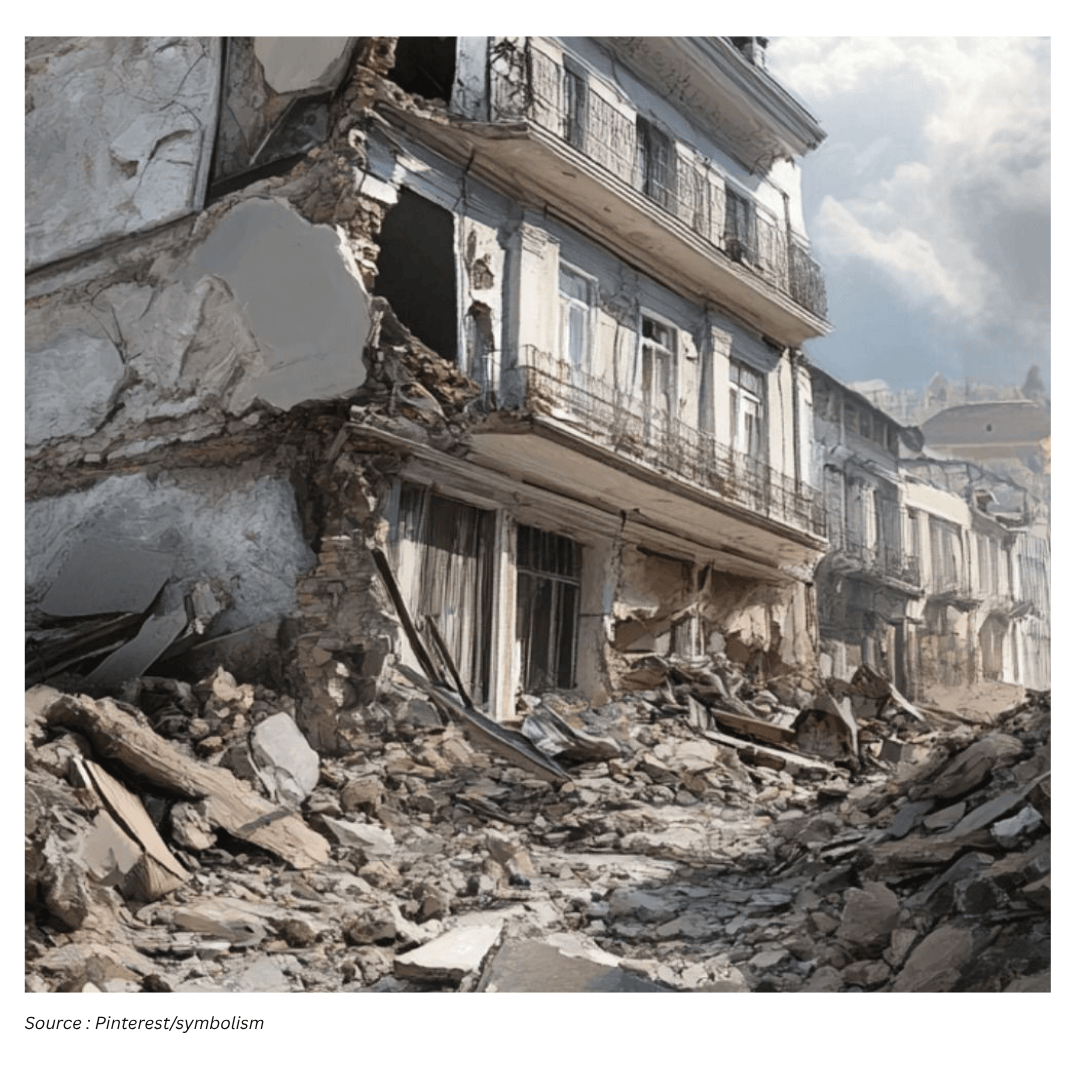
A system under pressure
Recent wildfires that devastated large parts of Los Angeles County have renewed attention on a problem that has been building for years: many Americans are struggling to insure their homes against natural disasters. The issue is not confined to one region, but California has become a particularly visible example of how quickly conditions can change when risks rise and insurers pull back.
Since 2022, seven of the 12 largest insurance companies have stopped issuing new homeowners policies in California, citing increased risks due to climate change. Similar pullbacks have occurred in other vulnerable states, including Louisiana and Florida. At the same time, the share of Americans without home insurance has increased from 5% to 12% since 2019. For those who still have coverage, the cost has climbed sharply: premiums in California, as elsewhere, have increased dramatically over the past five years.
These numbers point to a market that is struggling to function in the way homeowners expect. When coverage becomes unavailable or unaffordable, the problem is often framed as a straightforward gap: people need insurance, but the private market will not provide it at a price they can pay. Yet the underlying reality is more complicated, because some properties in disaster-prone areas may be so risky that traditional insurance can no longer work as it once did.
When private insurance retreats, government steps in
When private insurers do not provide coverage, government programs often fill part of the gap. The United States has done this before, notably with flood risk. The National Flood Insurance Program was established in the 1960s because almost all private insurers excluded flood coverage. In California, the California FAIR Plan serves more than 450,000 residents and is a typical example of a state-created insurer of last resort. Similar programs exist in many states, generally offering limited coverage to people who cannot obtain private insurance.
But public backstops have their own vulnerabilities. The scale of losses from major catastrophes can be so large that it becomes difficult for these programs to remain financially stable. It is not inconceivable that the recent wildfires could exceed the reserves and reinsurance available to the California FAIR Plan. Because of the way the plan is structured, such a shortfall would force other insurers—and ultimately homeowners—to make up the difference.
That dynamic reveals a central tension. Public programs can expand access to coverage, but they also redistribute risk and cost. When losses are extreme, the question of who ultimately pays becomes unavoidable, whether through premiums, assessments, or other mechanisms embedded in how these programs are designed.
Why the debate is not just technical
Insurance is often described as a financial product that allows people to share risk, so that if catastrophe strikes one person, that individual does not have to bear the costs alone. That description is accurate, but incomplete. Insurance also embodies values and serves public policy goals, even when those goals are not explicitly stated. Decisions about what to cover, how to price it, and who gets access inevitably involve social, political, and moral trade-offs.
This is why defining the problem carefully matters. A statement like “Homeowners need insurance coverage that they can’t afford in the private market” can sound like the right diagnosis. But it can also obscure a more difficult fact: some homes are simply too risky to insure in the usual way.
Consider a home in a coastal area that floods repeatedly. From an insurer’s perspective, the question becomes practical and blunt: how much should a policy cost when losses are likely to recur? When a house is subject to repeated losses, it may make more economic sense to buy and demolish it instead. That example illustrates why the issue cannot be reduced to affordability alone; it is also about the underlying level of risk and what society chooses to do when risk becomes chronic.
Competing values: protecting homeowners vs. pricing risk
Careful problem definition also clarifies what is at stake. One value is protecting the investments of current homeowners, including long-time residents who may have limited ability to absorb sudden premium increases. Another value is pricing risk correctly so that people do not move into dangerous developments or continue patterns of building and rebuilding in high-risk areas without facing the true costs.
In broader terms, one value emphasizes society’s collective responsibility toward people who experience financial distress after disasters. Another value emphasizes fair and efficient use of social resources. These values can conflict, and insurance policy sits in the middle of that conflict.
The tension is not new. In 1881, Supreme Court Justice Oliver Wendell Holmes Jr., in lectures later published as The Common Law, suggested that a state might conceivably make itself “a mutual insurance company against accidents” and distribute the burden of mishaps among all citizens, including aid for those who suffered losses from “tempest or wild beasts.” Holmes’ own view was that the state should not do these things. A strain of individualism has long argued that individual liberty, personal responsibility, and economic opportunity require people to win or lose on their own.
Under that individualist approach, the private insurance market pools risk and prices coverage mostly based on how much risk each policyholder presents. Homes in wildfire-prone areas are charged higher premiums. In theory, this is presented as morally sound and economically efficient: each policyholder bears the cost of their own risks.
But the modern reality complicates Holmes’ assertion. The state does, in fact, act as a kind of mutual insurance mechanism in many areas of life, through programs such as Medicaid and Social Security Disability Insurance. In disasters, government also provides aid for those who “suffered in estate … from tempest,” through the Federal Emergency Management Agency and other entities.
Since at least the New Deal, there has been broad recognition that some level of collective responsibility is essential. The debate is less about whether society should help at all and more about where the line should be drawn and how much responsibility should be shared.
Disaster policy sits between two extremes
Public policy on disaster losses falls between two endpoints. At one extreme is letting losses lie where they fall, leaving individuals to absorb the consequences. At the other is having the state assume all burdens of disaster losses. In practice, policymakers often look to insurance or insurance-like plans as solutions, whether those plans are public, private, or mixed.
FEMA’s role in flood risk offers a concrete illustration. The agency operates the National Flood Insurance Program in cooperation with private insurers and also provides direct grants for mitigation of flood damage. This combination reflects a broader approach: compensate losses, but also reduce future losses where possible.
As catastrophes such as floods, storms, and wildfires become increasingly common, the availability and affordability of property insurance has become a high-profile political issue. And politics, by definition, involves choices among competing goals.
Three questions that shape any workable solution
Designing an effective public solution to disaster insurance requires more than a quick fix. It requires deciding what the system is trying to do and what trade-offs it is willing to accept. Among the many questions policymakers must address, three stand out as foundational:
- What are the goals of the insurance?
- Who is being insured?
- How are policyholders and their risks classified?
These questions are interrelated. A system that prioritizes one goal—such as precise risk-based pricing—may undermine another goal—such as broad availability of coverage. Likewise, expanding a risk pool may improve stability but raise new questions about fairness and distribution.
1) What are the goals of insurance?
When an insurance solution is adopted rather than some other form of intervention, a primary goal is to compensate a policyholder after a loss. But compensation is not the only goal insurance can serve.
Insurance often aims to reduce losses as well as pay for them. Insurers can shape behavior in many ways, including offering lower premiums to homeowners who reduce hazards—for example, by keeping property free of flammable brush. These actions can have benefits beyond the individual household, because risk-reducing behavior can protect neighbors and communities too. In that sense, insurance can generate social benefits.
Once insurance is understood as a tool with social benefits, another question follows: how are those benefits distributed? Distribution can matter along race, gender, class, and other lines. Even if the mechanics of insurance are technical, the outcomes can reflect broader social patterns, which is one reason insurance policy debates can become politically charged.
Clarifying goals also helps identify limits. If a home faces repeated and severe losses, a compensation-focused model may become unsustainable. If the goal shifts toward preventing repeated losses, solutions may look different. The point is not that one goal is always correct, but that any system must choose what it is optimizing for.
2) Who is being insured?
Insurance works by transferring risk from an individual to a larger group that can share it, a process known as risk pooling. Pool size matters. If a pool is too small, it can struggle because there are not enough participants to spread the burden when major losses occur.
In catastrophe insurance, expanding the pool can be especially important, because disaster losses can be highly correlated: many people can suffer losses at the same time. Larger pools can help smooth those shocks, at least in principle.
Existing programs show both the promise and the limitations of pooling. The National Flood Insurance Program brings many homeowners across the country into a pool, but it also excludes some risks, such as damage from wind during a hurricane. That design choice shapes who is protected and against what.
Policy proposals can take pooling further. The proposed INSURE Act, introduced in the last Congress, would effectively put the entire nation in a pool to cover a variety of catastrophic risks, including flood, wildfire, earthquake, and others. The idea highlights a core policy lever: broader pooling can expand coverage, but it also raises questions about how costs are shared across regions and risk profiles.
Even within a single pool, equal membership does not mean equal treatment. People with the same insurance program can be charged different premiums and receive different amounts of coverage. That reality leads directly to the third question.
3) How are policyholders and their risks classified?
If insurers treated everyone exactly the same, they would quickly go out of business. Insurers analyze large amounts of information about past losses, current conditions, and future predictions to determine the risk posed by each policyholder. Actuaries and underwriters do this work, but it is not purely a matter of math. The way policyholders are classified reflects the goals and values embedded in the insurance system.
Typically, those goals include balancing widespread availability, broad coverage, and affordable pricing, along with the social benefits the insurance generates. That balance is difficult in catastrophe contexts, where risks can be extreme and shifting.
One view is that more precise risk classification and pricing are inherently good. Insurance involves transferring risk, and the more accurately risks can be calculated and priced, the better the process works from a technical standpoint.
But accuracy can conflict with other social goals. With catastrophes, broad coverage may be a top priority, especially if many people believe the state has a responsibility to protect its residents. Protecting homeowners’ investments can also be a priority; suddenly raising premiums for high-risk households could threaten those investments. Catastrophes also tend to generate communal responses, as unaffected Americans donate to organizations such as the Red Cross and other nonprofits to support victims. A strict focus on underwriting accuracy could undermine that sense of shared responsibility and community.
In other words, classification is not merely an actuarial exercise. It is also a decision about how much solidarity a society wants to embed in its insurance arrangements, and how much it wants individuals to bear the consequences of living in higher-risk places.
What better questions make possible
There may be no single, simple answer to the current strain on natural-disaster home insurance. Private insurers are responding to increased risks, homeowners are facing higher premiums and reduced availability, and public programs can be stretched by the sheer scale of catastrophe losses. In that environment, the most constructive step is often to sharpen the questions being asked.
Asking what insurance is for, who should be included, and how risks should be classified does not solve the problem by itself. But it clarifies the choices that are already being made—sometimes implicitly—through market decisions and public policy design. And because property insurance has become a high-profile political issue, clearer questions can lead to clearer choices about trade-offs, responsibilities, and the kind of protection society expects when disaster strikes.