
After the Floods, Underinsurance Becomes the Next Crisis
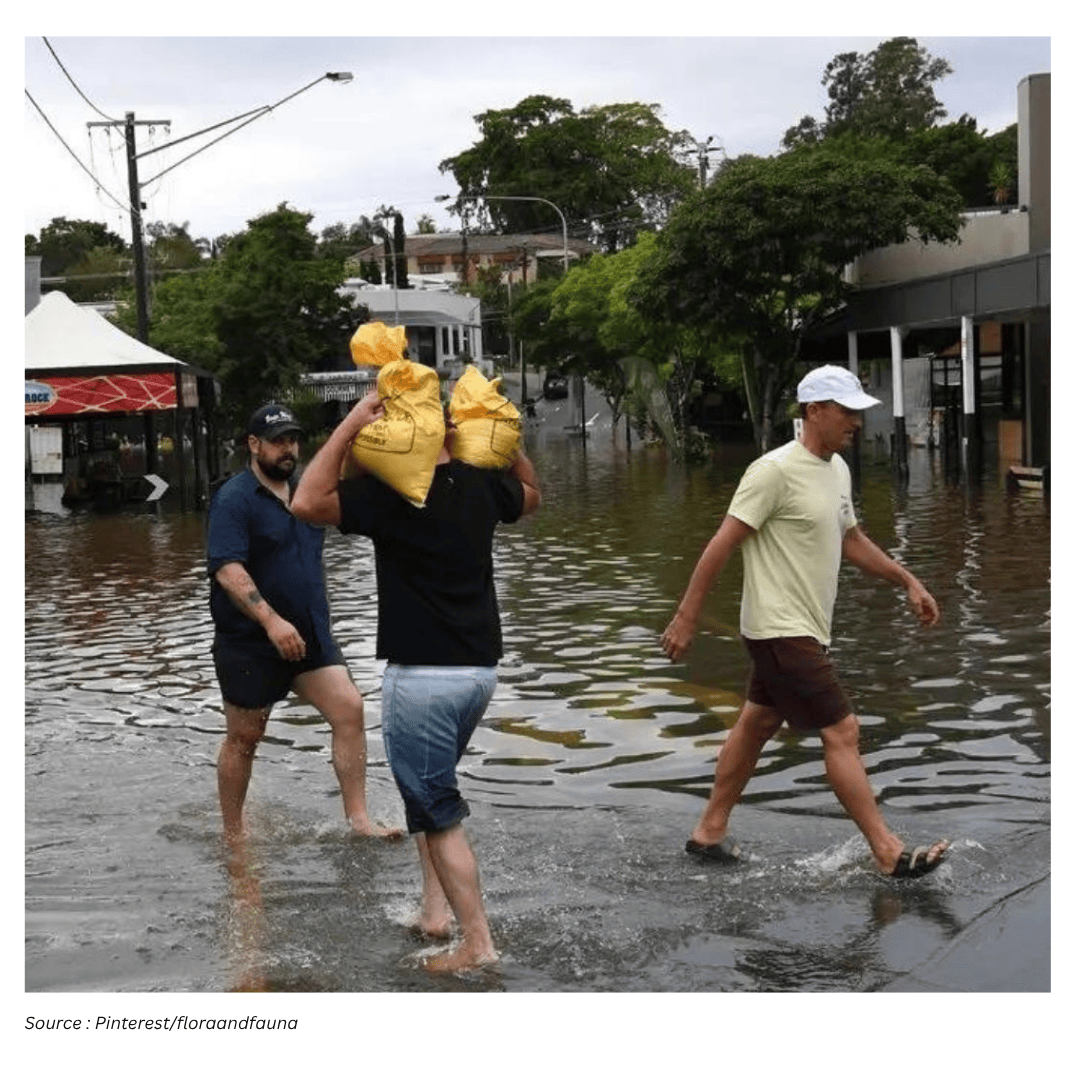
Floods, rising risk, and the growing problem of underinsurance
When major floods hit, attention naturally turns to the immediate damage: homes inundated, businesses disrupted, and communities facing the long work of recovery. But after the waters recede, another crisis can follow—underinsurance. As extreme weather events become more frequent and severe, insurance costs rise. That can push more households and small businesses to reduce their cover or abandon it altogether, leaving them exposed when the next disaster arrives.
In the wake of flooding along Australia’s eastern seaboard, public discussion has included claims that the event is extraordinarily rare. Yet the broader context is that science and the insurance sector increasingly treat extreme weather as a growing and persistent risk. Across areas prone to fires, cyclones and floods, premiums have risen sharply over the past decade as insurers absorb the cost of claims and price in future risk.
This is not a narrow issue affecting only one region. It is a national challenge that intersects with climate vulnerability, household finances, and the way governments choose to respond to disasters. If premiums continue to climb, the insurance “safety net” can thin out—first through underinsurance, then through non-insurance—turning natural disasters into deeper social and financial shocks.
Why insurance premiums are climbing
Insurance pricing reflects both what has happened and what insurers expect could happen. When claims rise, premiums tend to follow. Insurers also factor in future risks, particularly as the frequency and severity of extreme weather events increase with a warming climate.
The latest report from the Intergovernmental Panel on Climate Change, published this week, predicts global warming of 1.5°C will lead to a fourfold increase in natural disasters. That kind of projection matters for insurance markets because it points to higher expected losses over time. The result is pressure on premiums, especially in locations already exposed to floods, cyclones, or fires.
For households, the consequences are straightforward but severe: higher premiums can make comprehensive cover unaffordable. Some people respond by choosing lower levels of cover, higher excesses, or narrower policies. Others drop insurance completely. Either way, the risk doesn’t disappear—it shifts onto individuals and communities, and, eventually, onto governments when disaster recovery becomes a matter of public support.
What the affordability data shows in high-risk regions
Concerns about insurance affordability are not new. In 2017, the federal government tasked the Australian Competition and Consumer Commission (ACCC) with investigating insurance affordability in northern Australia, where destructive storms and floods are most common. The commission delivered its final report in 2020, and its findings illustrate how quickly insurance can become out of reach in disaster-prone areas.
The ACCC found the average cost of home and contents insurance in northern Australia was almost double the rest of Australia—$2,500 compared with $1,400. The rate of non-insurance was also almost double—20% compared with 11%.
Those figures matter beyond northern Australia. Even if the areas currently experiencing severe flooding are not the same as the riskiest locations highlighted in that inquiry, the underlying dynamics are similar. Where risks rise and premiums follow, more households end up underinsured or uninsured, and the financial fallout from the next event becomes more concentrated among those least able to absorb it.
The compounding cycle: disaster, premium rises, and shrinking coverage
Underinsurance is not just an individual budgeting choice; it can become a systemic pattern. The cycle is familiar:
- A major natural disaster occurs, producing large insurance claims.
- Insurers increase premiums to reflect those losses and anticipated future risks.
- Higher premiums lead more people to underinsure or drop cover.
- When the next disaster hits, more households and businesses are exposed, deepening the social and economic impact.
This is why rising premiums can be more than a price issue. They can erode resilience over time. Those without adequate insurance may face financial devastation after a disaster. And as premiums rise again, the number of people outside the insurance safety net can grow, compounding the harm that comes with the next extreme event.
Two established paths to lower premiums
In broad terms, there are two main ways to reduce insurance premiums over the long run.
- Reduce global warming. Australia cannot achieve this alone, but it can be part of the solution. Lower warming reduces the escalation of extreme-weather risk that drives claims and pricing.
- Reduce the damage caused by extreme events. This can be done by constructing more disaster-resistant buildings or avoiding rebuilding in high-risk areas.
Both approaches focus on reducing risk and losses, which is ultimately what insurance prices are built around. They are not quick fixes, but they address the underlying drivers of rising premiums.
The federal reinsurance pool plan: what it is intended to do
The federal government has focused much of its response on a different approach: subsidising insurance premiums in northern Australia through a reinsurance pool.
In the 2021 budget, the government committed A$10 billion to a cyclone and flood damage reinsurance pool, intended “to ensure Australians in cyclone-prone areas have access to affordable insurance”. Legislation to establish this pool is before parliament.
The rationale is that government can drive down insurance costs for consumers by stepping in as a wholesaler in the reinsurance market. Reinsurance is the insurance that insurers buy to protect themselves against the risk of crippling payouts. The idea is that discounted reinsurance would lower insurers’ costs, and those lower costs would then be reflected in lower premiums for customers.
However, the link between cheaper reinsurance and cheaper retail premiums is not guaranteed. Without a mechanism ensuring that insurers pass on savings, the benefits to consumers are uncertain.
Unclear benefits, uncertain costs
One of the central criticisms of the reinsurance pool approach is that there is no guarantee insurers will pass on cheaper costs to customers. That makes the consumer benefit unclear.
There is also the question of cost and risk allocation. In effect, the government would be shifting risk from insurers to itself—subsidising premiums for some parts of the country from the public purse. That may reduce pressure in targeted locations, but it also raises the issue of whether public funds are being used in the most effective way to address a growing national problem.
The ACCC inquiry gave considerable attention to the idea of a reinsurance pool. While acknowledging there could be some benefits, it concluded the risks outweigh the rewards and stated it did not consider a reinsurance pool necessary to address availability issues in northern Australia.
Two key shortcomings: targeting and mitigation
Beyond the broad concerns about effectiveness and cost, there are two telling failures in the reinsurance pool plan as described in the policy debate.
1) It does not target help to those who need it most. Subsidising insurance companies does not necessarily mean the people most under pressure—low-income households—receive meaningful relief. Insurance affordability is not evenly distributed. When premiums rise, households on tighter budgets are more likely to underinsure or go without, and they have less capacity to recover if disaster strikes.
There is a growing body of research indicating that natural disasters, and government responses to them, can contribute to greater inequality. In that context, improving access to insurance for people on low incomes who are at risk from natural disaster requires targeted support. One example raised in recent discussion is promoting non-profit “mutual” insurance schemes.
2) It does not reduce the overall cost of disasters. Only mitigation can bring the overall cost of natural disasters down. If losses keep rising, the pressure on premiums remains, regardless of how risk is redistributed between insurers and government.
Mitigation can include public works and improvements to buildings and properties. Examples discussed in policy and research include building levees, upgrading stormwater systems, and conducting planned burns, as well as strengthening homes through measures such as reinforcing garage doors, shuttering windows, and managing vegetation around properties.
The ACCC’s insurance report identifies a range of ways mitigation strategies can be tied into insurance pricing. Yet this kind of integration has not been incorporated into the government’s response to the insurance crisis described in the inquiry.
Limited support for the pool as a meaningful solution
Another challenge for the reinsurance pool approach is the lack of broad support beyond the federal government. As outlined in the policy discussion, neither the ACCC, the insurance industry, nor community sector advocacy organisations support reinsurance as a meaningful solution to the affordability problem.
This matters because insurance affordability is not only a technical market issue. It is also a social policy issue, affecting community resilience and recovery. Solutions that do not command confidence across regulators, industry, and advocacy groups may struggle to deliver durable outcomes.
Why the plan may not help those affected by current floods
A reinsurance pool aimed at cyclone-prone northern Australia is not designed to address the immediate situation of communities affected by flooding elsewhere. Even within its intended scope, critics argue it will not do much to solve the insurance crisis in northern Australia itself.
For areas of New South Wales and Queensland currently flooded, and for the rest of the country outside the pool’s ambit, the relentless rise in insurance costs may continue. That trajectory risks tipping more homes out of the insurance safety net, increasing the number of households that will face severe financial consequences in future disasters.
What a “better plan” needs to recognise
If underinsurance is the next crisis after a disaster, then a better plan needs to start with the basic reality: there are no cheap and easy solutions. But the terrain is mapped across multiple inquiries and reports into insurance and climate vulnerability.
Any credible response must take climate vulnerability seriously and focus on measures that reduce risk and losses, not only measures that redistribute financial exposure. That includes stronger attention to mitigation—both public infrastructure and building resilience—and to targeted support that reaches low-income households who are most likely to be priced out of adequate cover.
Blanket subsidies for the insurance industry may be politically attractive as a quick intervention, but without clear pass-through to consumers, without targeting those most in need, and without reducing disaster losses through mitigation, such measures risk falling short of what the situation demands.
The stakes: resilience before the next disaster
Underinsurance is often invisible until it is too late. After a major flood, fire, or cyclone, the gap between what people assumed they were covered for and what their policy actually provides can become painfully clear. For those who have dropped insurance altogether, the consequences can be even harsher.
As extreme weather events intensify and premiums rise, the challenge is to prevent a future in which disasters routinely push more people into financial hardship. That means focusing on the drivers of risk, improving the resilience of buildings and infrastructure, and ensuring support is designed to reach the households most exposed to both natural hazards and rising costs.
In practical terms, the question is not only how to make insurance cheaper in the short term, but how to keep communities insurable and protected as climate risks evolve. Without that broader approach, the aftermath of each disaster may increasingly include a second wave of harm—one driven not by water, wind, or fire, but by the absence of adequate financial protection.